Management portal
Fleet overview, performance, inventory, groups, licenses and administrative context. File listings are read-only.

Build an acceptance brief that connects platform claims to your devices, operator workflows, access rules and buying decision.

Remote support, endpoint management and security monitoring overlap, but they are not interchangeable buying categories. Start with the work you need to complete: helping someone on a desktop, understanding device inventory, distributing a reviewed software change or assessing provider-reported exposure. Record which of those jobs is essential today and which belongs to a later roadmap. Then identify the operator device, endpoint platforms, client structure and expected connectivity. This prevents a comparison from treating a security engine and a remote-control app as equivalent because both mention endpoints. CyberCursor’s current focus includes Windows and Mac desktop access and endpoint context, with broader automation and security work at separate stages. Evaluate each relevant workflow rather than assuming that one product description proves every category is complete.
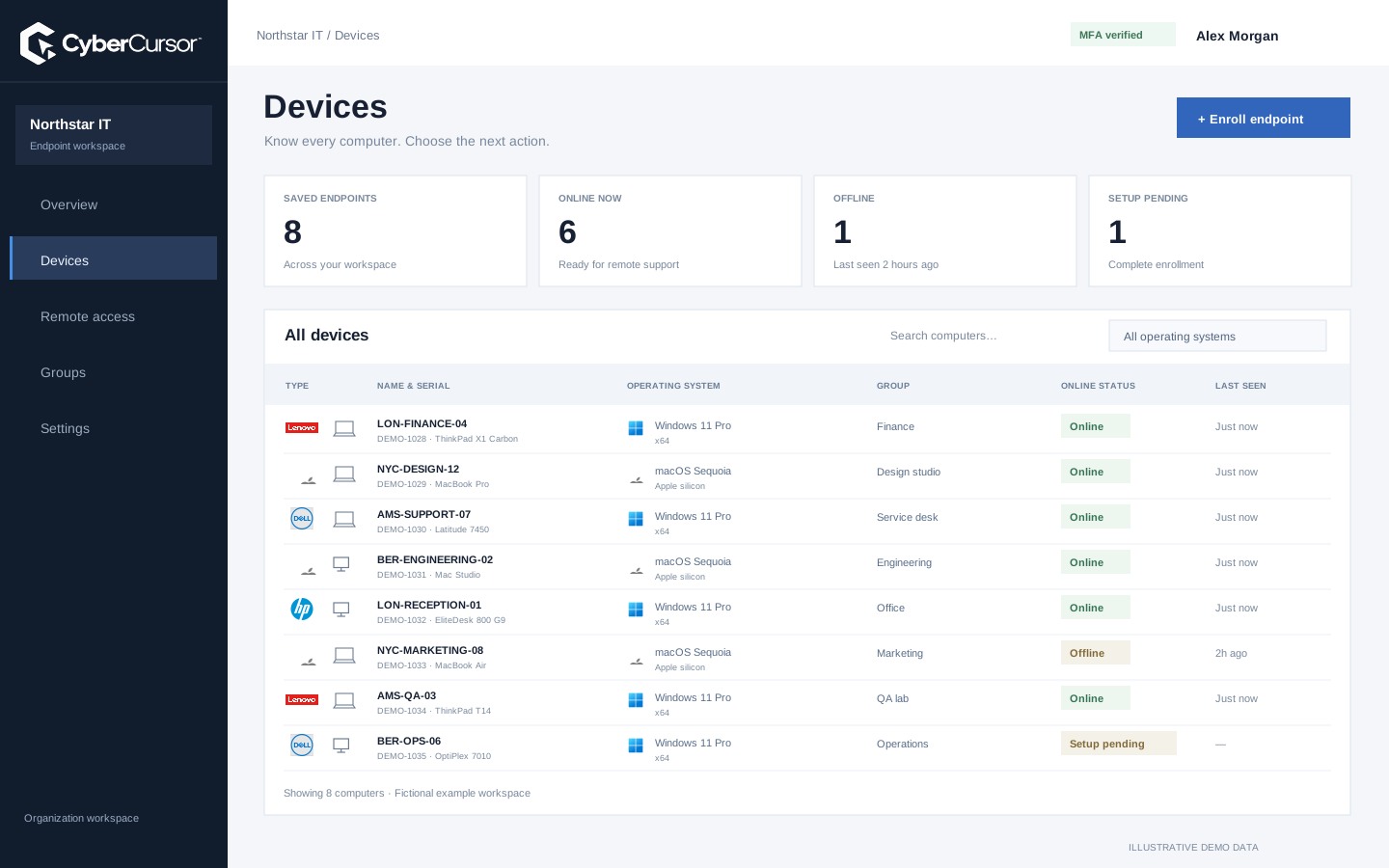
A vendor page tells you how the product is positioned; your evaluation determines whether its behavior meets your environment’s requirements. Record the source for an advertised feature, the relevant edition and the conditions attached to it. Then define a concrete test on an owned device with a result your team can inspect. For remote support, test actual screen and input behavior rather than only signing in. For monitoring, compare reports with local facts and check stale data. For software maintenance, independently verify the installed version. A fictional mockup, a planned platform or a package build should not be entered as a passed runtime test. Keeping these evidence categories separate makes a comparison fairer and gives the eventual purchasing decision a useful basis beyond marketing language.
Ask who can access a client endpoint, how that permission is assigned and what happens when it expires or is revoked. Include platform ownership, client administrators, regular management users and temporary specialists in the brief. Check whether file and terminal access follow different rules from remote view/control. An allowed session is only half the test: an unrelated client, an unassigned endpoint and an expired guest should also be refused. CyberCursor’s current pilot separates Super Admin from client endpoint operations and requires the installed controller for interactive access. Do not infer a formal certification from those controls. If your organization needs a particular audit report or assurance framework, obtain independently verified evidence for it and assess the operational behavior separately against your own support process.
Fleet overview, performance, inventory, groups, licenses and administrative context. File listings are read-only.
Windows and Mac apps for interactive screen access, terminal commands and bounded file modifications.
Identity, reports and authorized actions on the owned computer. Availability depends on endpoint readiness and OS permissions.
Commercial comparison requires the same scope and period on every side. CyberCursor’s public monthly endpoint rates use one rate for the whole fleet: five dollars for one to one hundred endpoints, three dollars for one hundred and one to one thousand, and one dollar from one thousand and one onward. The pricing calculator shows the arithmetic for the selected quantity; an enterprise agreement and actual rollout scope still need confirmation. For another vendor, record whether pricing counts endpoints, users, technician seats, editions or add-ons, and whether the published figure assumes annual billing. Do not turn quote-only pricing into an invented exact amount. Include implementation, support, security providers and any tools that must remain in use when comparing the operational cost of a pilot.

A strong pilot includes conditions that interrupt ordinary work. Test a sleeping or disconnected endpoint, a controller sign-out and a permission change. For files, record transfer limits and overwrite behavior; for terminal commands, record time limits and service-account context. For automation, evaluate an unsuccessful canary, missing results and cancellation without assuming that every local side effect is reversed. Ask how backups and replacement-host recovery have been tested and which commitments are part of the commercial agreement. CyberCursor’s current pilot has defined file and command limits and separately documented release gates. Those details make an evaluation more useful when they are compared with actual operational requirements rather than hidden behind an undifferentiated green checkmark. Prioritize the failure cases that would create the greatest support burden in your environment.
Organizations, clients and high-level administration.
Assigned endpoints, groups, enrollment keys and operational workflows.
Explicitly shared endpoints with a scoped expiry, rather than whole-client access.
For each essential workflow, record the requirement, source, test device, observed result and any remaining condition. Use clear states such as documented, tested, planned or not evaluated rather than marking an uncertain item as a win. Keep screenshots and returned results attached to their exact test context, and label fictional illustrations. Review the ledger with the operational owner and the people responsible for security, privacy and recovery. A useful decision may be to expand a pilot, defer one capability or keep a complementary tool; it need not pretend that one platform is already best at every category. Contact connect@cybercursor.com with your acceptance brief and fleet composition. CyberCursor can then be evaluated around the specific workflows and commercial assumptions that matter to your organization.
Operational details matter as much as the interface.
No. Keep planned, documented and independently tested capabilities distinct so the decision reflects current evidence.
One rate applies to the whole monthly fleet: $5 at 1–100, $3 at 101–1,000 and $1 at 1,001+ endpoints. Confirm agreement scope before purchase.
Label them as requiring a quote. Do not invent a precise rate or compare prices with different billing units or editions as though they were identical.
Use an owned endpoint to verify actual screen and intended input behavior, current role scope, refusal after revocation and cleanup after the session.
Connect this workflow to the rest of your endpoint workspace.
Prepare client ownership, groups, license keys, platform builds and acceptance checks for a controlled CyberCursor pilot.
Explore RESOURCESPILOTUnderstand the roles of the web portal, installed controller, endpoint agent, identity controls and provider-connected reporting.
Explore RESOURCESPILOTCompare remote support, endpoint operations and security tools using workflow evidence, platform coverage and clear commercial assumptions.
ExploreStart with a conversation about your fleet, your workflows, and a controlled pilot.